



N-type calcium channel
N-type calcium channel (CaV2.2) is localized at nerve terminals, including nociceptive fibers, where it initiates neurotransmitter release and supports synaptic transmission in ascending pain pathways[1]. Mechanistically, nociceptin opioid peptide receptor activation regulates CaV2.2 through G protein-dependent inhibition, reducing calcium currents and changing presynaptic calcium levels and neurotransmission[2]. In inflammatory pain models, CaV2.2 expression increases after CFA injection in thermal-responsive sensory neurons, and specific CaV2.2 inhibition blocks thermal hyperalgesia and sensory nerve growth involving ERK1/2 signaling[3]. Compared with related isoforms, exon 37a-containing N-type channel splice variants are enriched in nociceptive neurons, downregulated in neuropathic pain, and specifically required for basal thermal nociception and inflammatory or neuropathic hyperalgesia[4]. For experimental applications, CaV2.2 blockers such as C2230 stabilize inactivated CaV2.2, inhibit high-frequency channel activity, reduce spinal excitatory neurotransmitter release, and mitigate neuropathic, orofacial, and osteoarthritic pain-like behaviors[5]. Peptide inhibitors also provide research value, because Eu1.6 inhibits N-type calcium channel currents in dorsal root ganglion neurons and shows analgesic activity in sciatic nerve injury and chronic constriction injury pain models[6].
References:
- [1]. Sousa SR, et al. Venom peptides as a rich source of cav2.2 channel blockers. Toxins (Basel). 2013 Feb 4;5(2):286-314. [Content Brief]
- [2]. Caminski ES, et al. Regulation of N-type calcium channels by nociceptin receptors and its possible role in neurological disorders. Mol Brain. 2022 Nov 24;15(1):95. [Content Brief]
- [3]. Pitake S, et al. Inflammation Induced Sensory Nerve Growth and Pain Hypersensitivity Requires the N-Type Calcium Channel Cav2.2. Front Neurosci. 2019 Sep 19;13:1009. [Content Brief]
- [4]. Altier C, et al. Differential role of N-type calcium channel splice isoforms in pain. J Neurosci. 2007 Jun 13;27(24):6363-73. [Content Brief]
- [5]. Tang C, et al. C2230, a preferential use- and state-dependent CaV2.2 channel blocker, mitigates pain behaviors across multiple pain models. J Clin Invest. 2024 Dec 10;135(4):e177429. [Content Brief]
- [6]. Liu Z, et al. A novel α-conopeptide Eu1.6 inhibits N-type (CaV2.2) calcium channels and exhibits potent analgesic activity. Sci Rep. 2018 Jan 17;8(1):1004. [Content Brief]
-
N-type calcium channel Related Products (22)
Related Products (22)

- 1
- 2
-
Ziconotide acetate
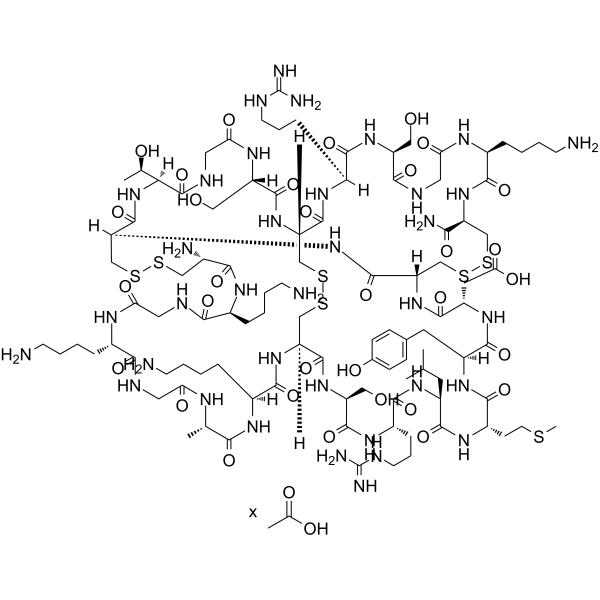 0 ImagesSynonyms: SNX-111 acetateZiconotide acetate (SNX-111 acetate), a peptide, is a potent and selective block of N-type calcium channels antagonist. Ziconotide acetate reduces synaptic transmission, and can be used for chronic pain research.
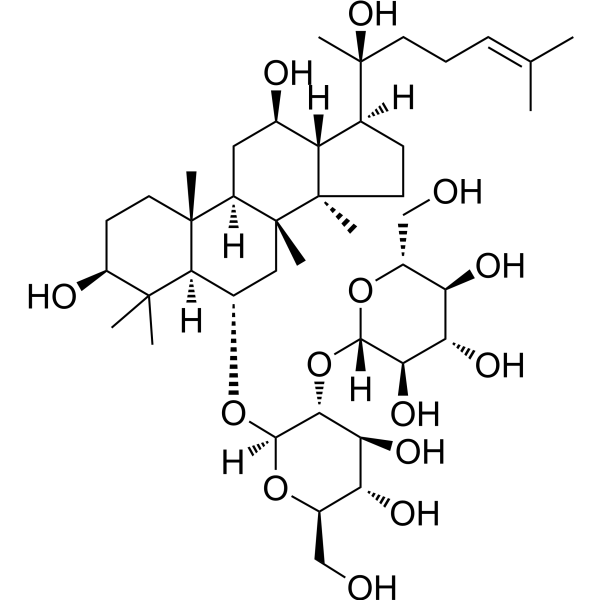
-
Nefiracetam
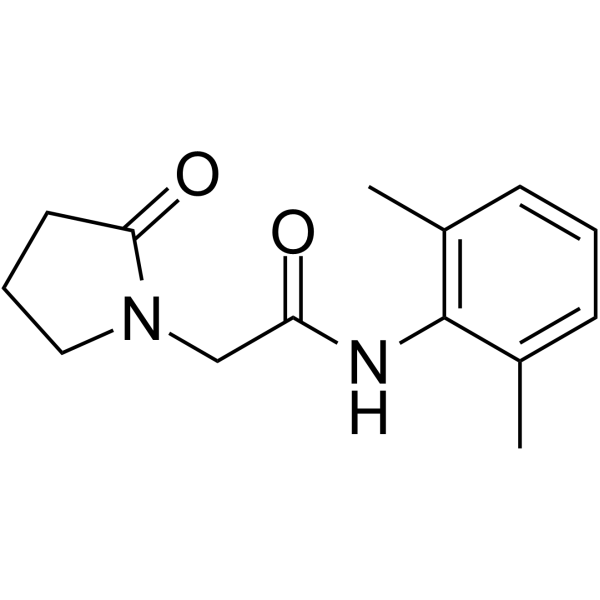 0 ImagesSynonyms: DM9384; DZL-221Nefiracetam is a cognition-enhancing agent. Nefiracetam is an activator of nAChR, N-methyl-D-aspartate receptor (NMDAR), mGluR5, PKC, gamma-aminobutyric acid (GABA), and N/L-type Ca2+ channels. Nefiracetam promotes neuroplasticity and enhances neuroprotection. Nefiracetam can be used in Alzheimer's disease, epilepsy, and cerebral ischemia research.
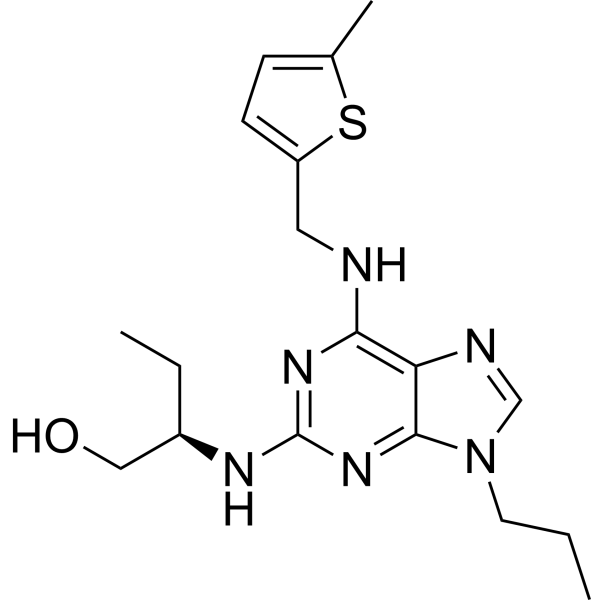
-
TROX-1
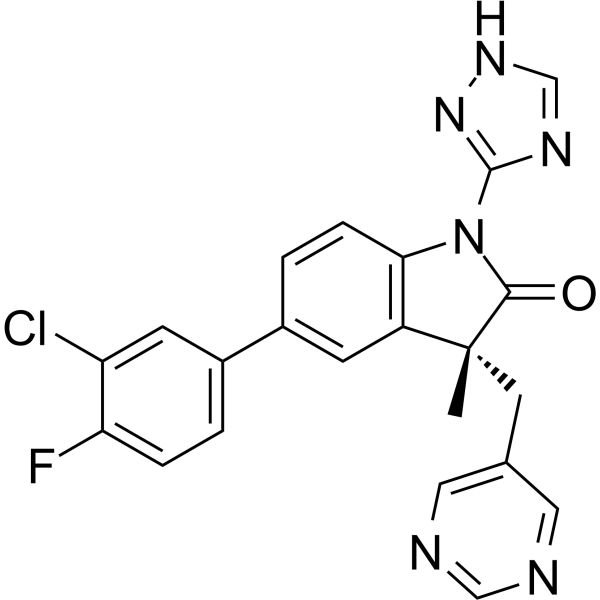 0 ImagesTROX-1 is a selective, orally active and brain-penetrant N-type calcium channel (Cav2.2) inhibitor with an IC50 value of 0.11 μM. TROX-1 exerts state-dependent and use-dependent inhibition, preferentially targets open/inactivated channels, blocks depolarization-associated calcium influx, and fully blocks calcium influx in rat dorsal root ganglion neurons. TROX-1 reverses inflammatory-induced hyperalgesia, nerve injury-induced allodynia. TROX-1 can be used for the research of pain.
-
BTT-369
 0 ImagesCat. No.: HY-115596CAS No.: 2413939-96-3BTT-369 is a CaVα1·CaVβ3 protein-protein complex antagonist with a Ki of 2.0 μM. BTT-369 inhibits CaV2.2 currents, with an apparent IC50 value of 31 μM. BTT-369 disrupts the interaction between CaVα1 and CaVβ3 subunits. BTT-369 reduces the current density of CaV2.2, and shifts the voltage dependence of steady-state inactivation and activation of CaV2.2 to more positive potentials. BTT-369 alleviates mechanical hyperalgesia in a rat model of tibial nerve injury. BTT-369 can be used for the study of neuropathic pain.
-
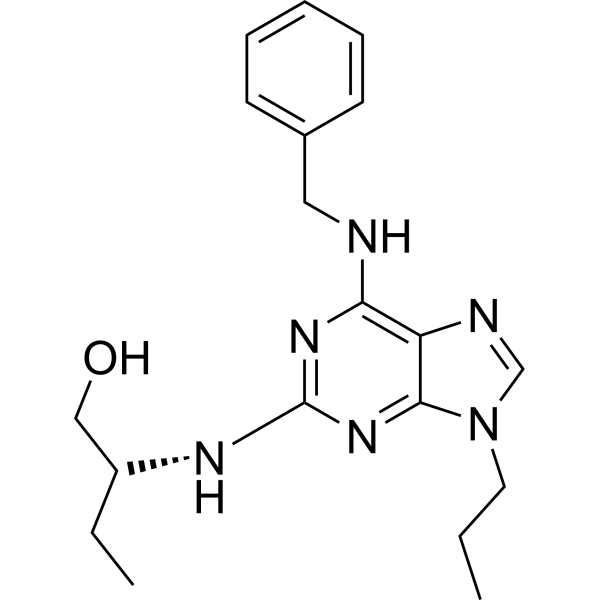
NP118809
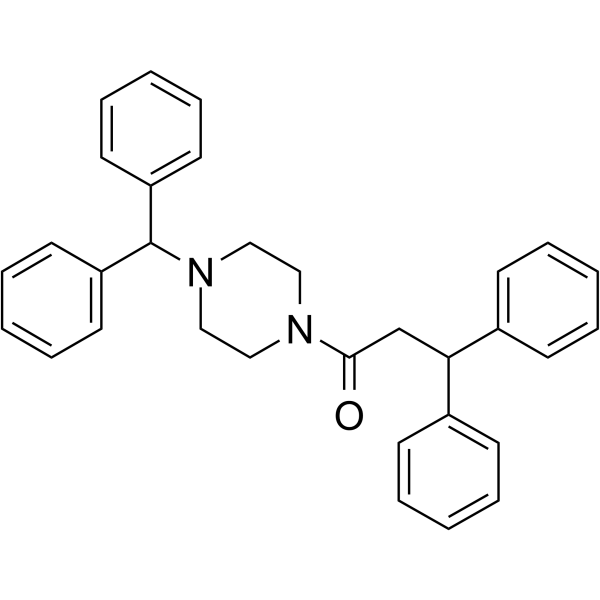 0 ImagesSynonyms: 39-1B4NP118809 is a potent N-type calcium channel blocker, with an IC50 of 0.11 μM; also less potently inhibits L-type calcium channel with an IC50 of 12.2 μM.
-
Cav 2.2 blocker 2
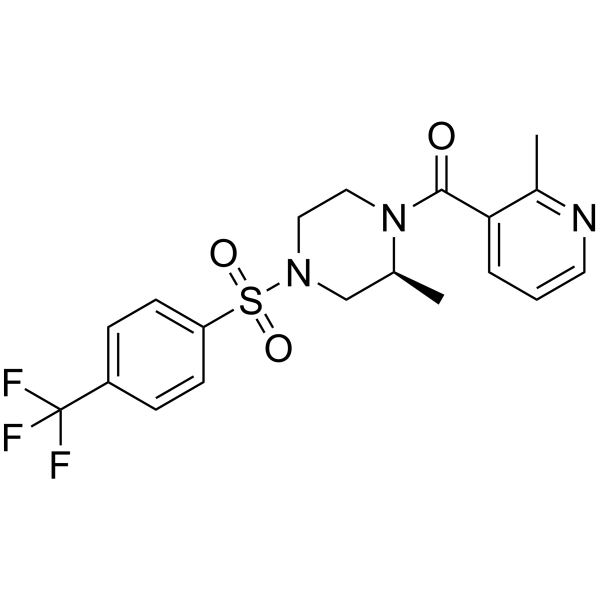 0 ImagesCav 2.2 blocker 2 is a Cav2.2 calcium channel blocker extracted from patent WO2017046581A1, compound 1. Cav 2.2 blocker 2 can reverses hyperalgesia associated with an injury or inflammation in conjunction with the opioid.
-
MONIRO-1
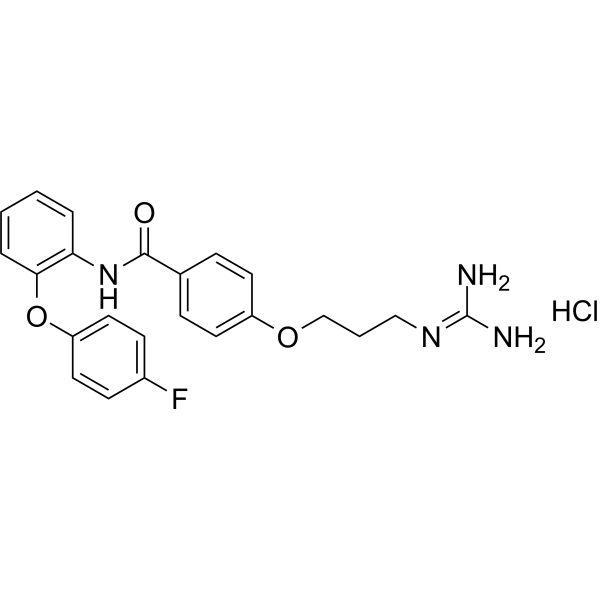 0 ImagesMONIRO-1 is a T-type and N-type calcium channel blocker with IC50 values of 34, 3.3, 1.7 and 7.2 µM against hCav2.2, hCav3.1, hCav3.2 and hCav3.3, respectively. MONIRO-1 has low activity against L-type calcium channels. MONIRO-1 can be used for the study of pain and epilepsy.
-
PD0176078
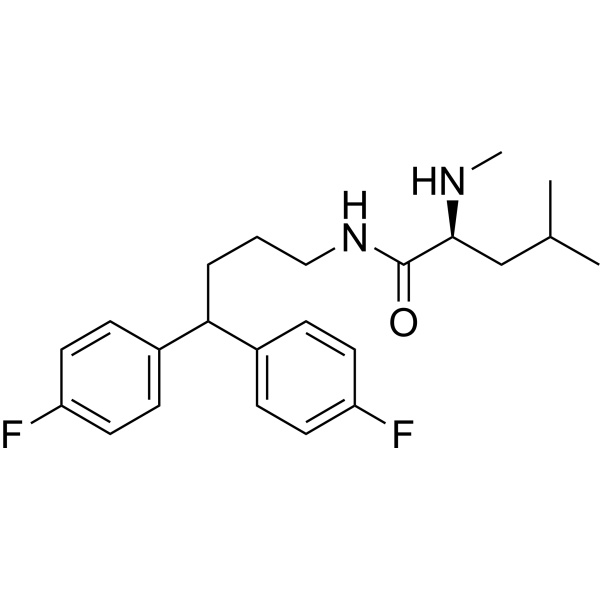 0 ImagesPD0176078 is a newly found N-type Calcium channel blocker.
-
Ziconotide
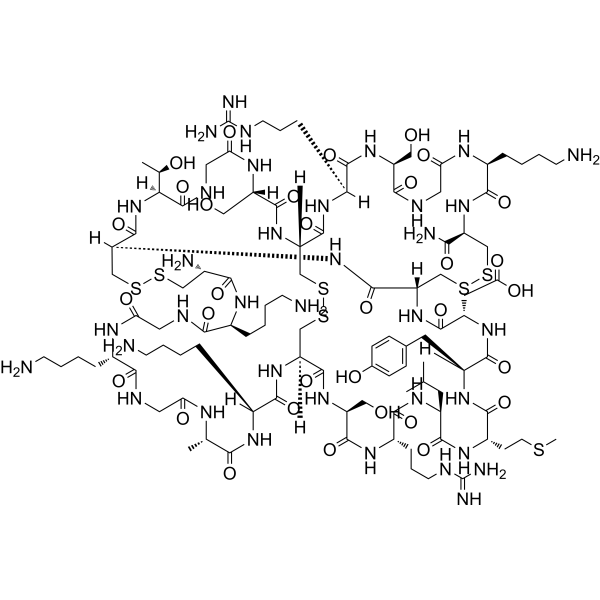 0 ImagesCat. No.: HY-P0062CAS No.: 107452-89-1Synonyms: SNX-111Ziconotide (SNX-111), a peptide, is a potent and selective block of N-type calcium channels antagonist. Ziconotide reduces synaptic transmission, and can be used for chronic pain research.
-
Ziconotide TFA
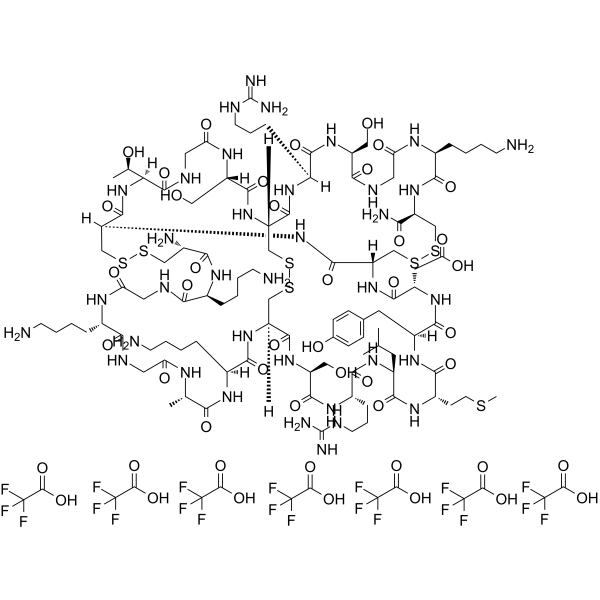 0 ImagesCat. No.: HY-P0062ASynonyms: SNX-111 TFAZiconotide TFA (SNX-111 TFA), a peptide, is a potent and selective block of N-type calcium channels antagonist. Ziconotide TFA reduces synaptic transmission, and can be used for chronic pain research.
-
PAM-2
 0 ImagesCat. No.: HY-180400CAS No.: 1426293-61-9PAM-2 is a potent, orally active, CNS-penetrant selective α7 nAChR positive allosteric modulator (human α7 nAChR EC50: 39 μM, rat α7 nAChR EC50: 12 μM) with anti-nociceptive and anti-inflammatory activity. PAM-2 exhibits selectivity over α9α10 nAChR (IC50 = 174 μM) and CaV2.2 channel (IC50 = 89 μM). PAM-2 decreases Streptozotocin (STZ) (HY-13753)- and Oxaliplatin (HY-17371)-inducned nuroparhic pain in mice by α7 nAChR potentiation. PAM-2 can be used for the research of neuropathic pain.
-
Calcium Channel antagonist 6
 0 ImagesCat. No.: HY-169845CAS No.: 687568-35-0Calcium Channel antagonist 6 (Compound 328) is a highly selective antagonist of voltage-gated calcium channel CaV2.2 with an IC50 value of 0.37 μM. Calcium Channel antagonist 6 inhibits of neuron depolarization-induced Ca2+ influx. Calcium Channel antagonist 6 is promising for research of neuropathic pain.
-
Cav 2.2/3.2 blocker 1
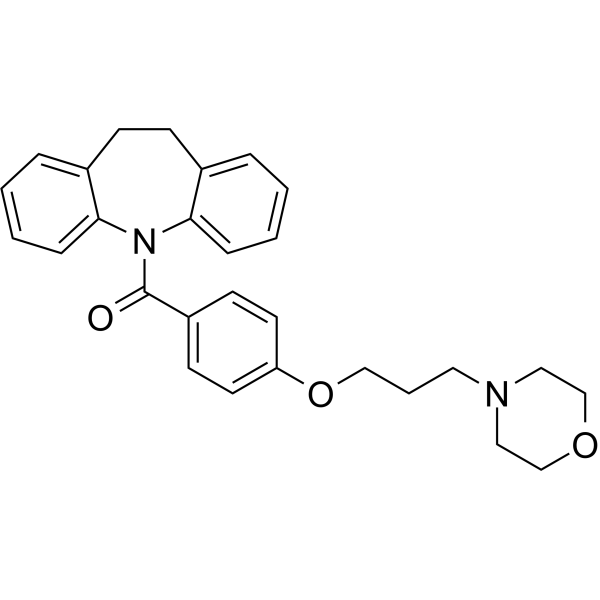 0 ImagesCat. No.: HY-147639CAS No.: 2987640-67-3Cav 2.2/3.2 blocker 1 (Compound 9e) is a neuronal calcium channel blocker with IC50 values of 78 μM and 80 μM against Cav2.2 and Cav3.2, respectively. Cav 2.2/3.2 blocker 1 can penetrate the CNS.
-
sFTX-3.3
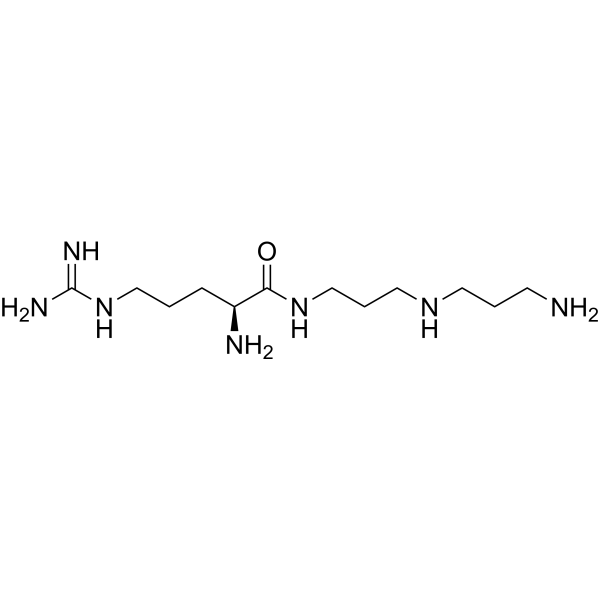 0 ImagesCat. No.: HY-131942CAS No.: 141997-14-0sFTX-3.3 is a Ca2+ channel antagonist with IC50s of approximately 0.24 mM and 0.70 mM against P-type and N-type channels.
-
COX-2/CaV2.2-IN-1
 0 ImagesCat. No.: HY-181612COX-2/CaV2.2-IN-1 is an orally active and selective dual COX-2/CaV2.2 inhibitor, exhibiting a COX-2 IC50 of 0.26 μM and a CaV2.2 IC50 of 0.29 μM. COX-2/CaV2.2-IN-1 suppresses inflammatory responses and inflammatory mediator (IL-6, TNF-α, NO) production. COX-2/CaV2.2-IN-1 produces pronounced analgesic effects in diverse models of inflammatory, neuropathic, and visceral pain. COX-2/CaV2.2-IN-1 can be used for the research of chronic pain.
-
PD 175069
 0 ImagesCat. No.: HY-105365CAS No.: 217170-95-1PD 175069 is a potent and selective N-type calcium channel antagonist with an IC50 of 0.32 μM. PD 175069 is efficacious in an audiogenic seizure model using DBA/2 mice. PD 175069 can be used for research on neurological conditions such as neuropathic pain and stroke.
-
Huwentoxin XVI
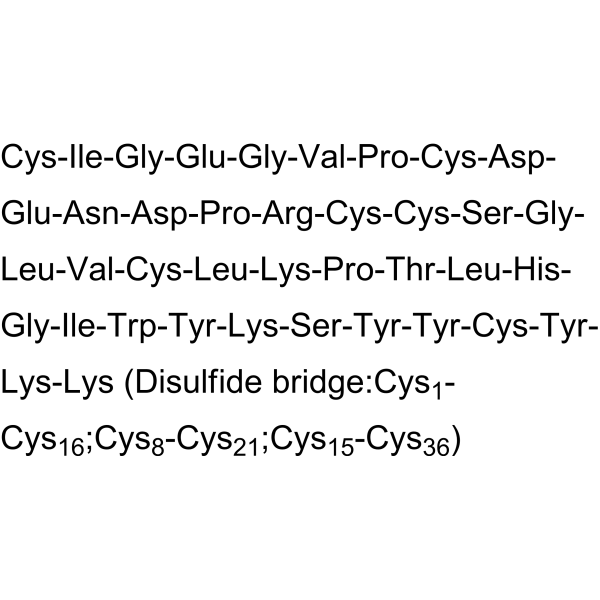 0 ImagesCat. No.: HY-P1078CAS No.: 1600543-88-1Huwentoxin XVI, an analgesic, is a highly reversible and selective mammalian N-type calcium channel (IC50 of ~60 nM) antagonist from Chinese tarantula Ornithoctonus huwena. Huwentoxin XVI has no effect on voltagegated T-type calcium channels, potassium channels or sodium channels.
- 1
- 2



